
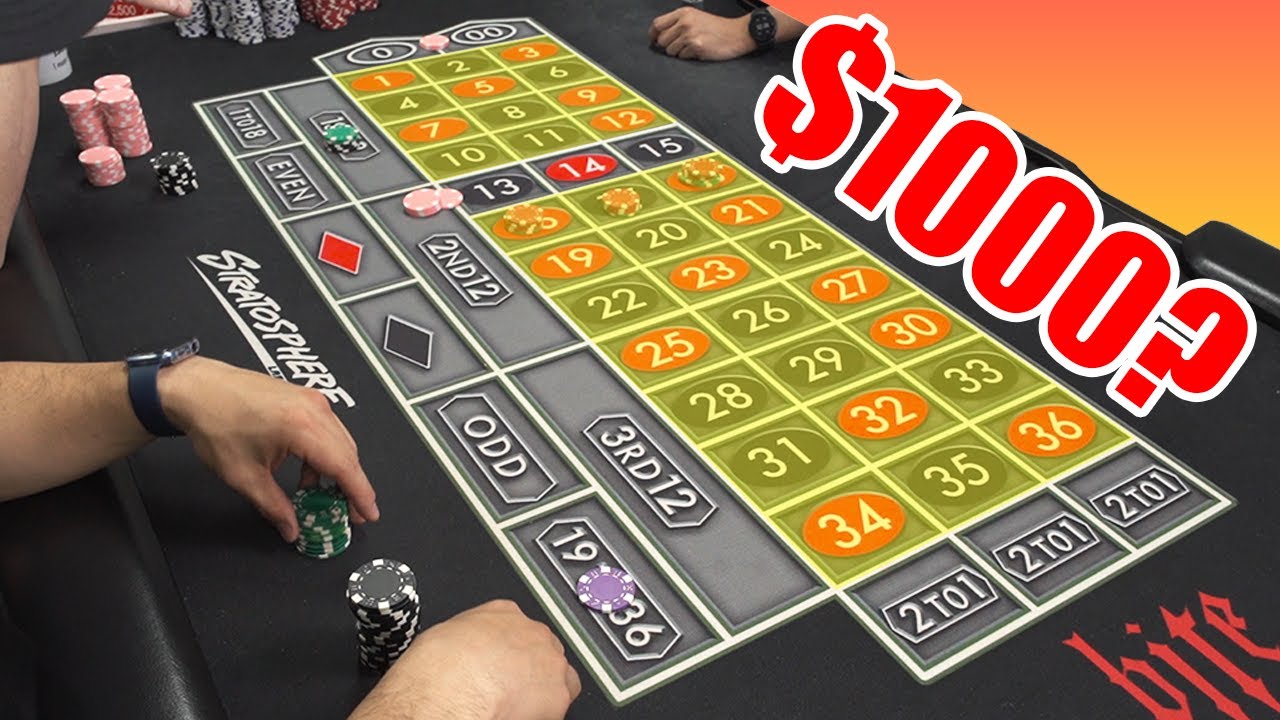
Unlock a $1000 Winning Strategy with This Proven Roulette System!
Mastering Roulette Strategy: Your Comprehensive Guide
Roulette is one of the most iconic casino games in the world, known for its spinning wheel and the thrill of gambling on either a single number or a myriad of potential outcomes. While roulette is fundamentally a game of chance, there are strategies that players can employ to enhance their winning potential and manage their bankroll effectively. In this article, we will delve deep into several popular roulette strategies, their advantages and disadvantages, and how you can effectively implement them in your gameplay.
Understanding Roulette: The Basics
Before we explore specific strategies, it is crucial to familiarise yourself with the basics of roulette. The game is primarily divided into two main types: American Roulette and European Roulette. The difference lies in the number of zeros on the wheel:
- American Roulette features a wheel with 38 total numbers (1-36, 0, and 00).
- European Roulette is slightly advantageous to players, with only 37 numbers (1-36 and a single 0).
The presence of an additional zero in American Roulette increases the house edge, making European Roulette a more favourable option for players seeking to implement effective strategies.
Key Terms in Roulette
- House Edge: The mathematical advantage that the casino has over the players, which varies between American and European roulette.
- Bet Types: A variety of betting options exist, including inside bets (single number or a small group of numbers) and outside bets (parlaying on broader categories such as colours or even/odd).
Popular Roulette Strategies
1. The Martingale Strategy
The Martingale strategy is perhaps the most well-known betting system used in roulette. The basic premise is straightforward:
- Start with a base bet (often on red or black).
- If you win, you keep your winnings and bet the same amount again.
- If you lose, you double your bet in the subsequent round.
Advantages
- Theoretically, this strategy guarantees a win that recoups all previous losses, given that you have an infinite bankroll and no table limits.
Disadvantages
- The primary downside is risk; a streak of losses can quickly escalate your betting amount, leading to substantial financial losses.
- Players may hit table limits, restricting your ability to double your bet further.
2. The Fibonacci Strategy
The Fibonacci strategy is based on the famous mathematical sequence where each number is the sum of the two preceding numbers (0, 1, 1, 2, 3, 5, 8, 13, etc.):
- Begin by betting the first number in the Fibonacci sequence.
- If you win, move back two numbers in the sequence for your next bet.
- If you lose, move one number forward in the sequence.
Advantages
- This strategy can help manage risk because it doesn’t require doubling your previous bet, unlike the Martingale.
Disadvantages
- While the Fibonacci strategy can mitigate some losses, it does not guarantee profits and can still lead to significant losses if a losing streak persists.
3. The D’Alembert Strategy
The D’Alembert strategy is a safer alternate betting system where players increase their bets after a loss and decrease them after a win:
- Start with a base unit bet.
- After each loss, increase your next bet by one unit.
- Conversely, reduce your bets by one unit following a win.
Advantages
- This approach allows for a more balanced risk and is less aggressive than the Martingale.
Disadvantages
- While it is a more conservative approach, it still does not shield players from extended losing streaks.
4. The Labouchere Strategy
The Labouchere strategy is more complex and requires players to create a betting line. The player begins by writing down a series of numbers that represent the desired profit:
- Bet the sum of the first and last numbers in your line.
- If you win, cross those numbers off the list.
- If you lose, add the amount you just bet to the end of the line.
Advantages
- This strategy allows you to set clear profit margins and manage your overall bankroll effectively.
Disadvantages
- The complexity of the tracking system can become cumbersome, and extended losing streaks can still lead to substantial losses.
Best Practices When Using Roulette Strategies
Bankroll Management
Regardless of the strategy employed, effective bankroll management is essential. Players should:
- Set a budget before starting to play and adhere to it strictly.
- Determine bet sizes that allow for multiple rounds of play, providing longevity to your gambling experience.
- Avoid chasing losses, which can lead to hasty and poorly thought-out betting decisions.
Practice with Demo Games
Before committing real money, take the opportunity to practice your chosen strategy with free online roulette games. This allows you to refine your approach without financial risk.
Choose the Right Game
Prioritise European Roulette when possible, as the lower house edge provides better long-term winning potential.
Conclusion
Roulette may be a game of chance at its core, but the strategic implementation of betting systems can elevate your playing experience. By understanding the various strategies available—be it the Martingale, Fibonacci, D’Alembert, or Labouchere—you can make informed decisions on your bets and better manage your bankroll.
Utilising these strategies, combined with disciplined bankroll management and practice, can significantly maximise your chances of walking away from the table in profit.
For those searching for an edge, incorporating tools from Roulette Calculators can enhance your strategic implementation. These tools assist with calculations and can help streamline your betting approach based on historical data and trends.
For more information on the tools from Roulette Calculators, visit https://roulettecalculators.com.


Latest Post

news via inbox
Nulla turp dis cursus. Integer liberos euismod pretium faucibua


